Key takeaways
- Little or no faucet flow during cold weather warrants investigation rather than an automatic diagnosis.
- The regional warning identifies vulnerable settings without describing every local house.
- A suspected leak needs a source assessment as well as an inspection for wet finishes.
- Observations made before and after flow returns should remain distinguishable in the record.
- Pipe repair does not by itself demonstrate that nearby building materials have dried.
Reduced flow is a symptom to describe precisely
The regional report names little or no faucet flow as a possible frozen pipe sign. An owner can make that observation more useful by identifying the affected fixture and whether the change was noticed elsewhere. The account should describe what happened without assuming that every low flow condition has the same cause.
Timing also helps the professional assessing the plumbing. A note about when the symptom was first noticed, whether it changed, and whether visible leakage followed is more informative than a broad statement that the house froze. The observer should keep reported conditions separate from conclusions that require an inspection of the pipe.
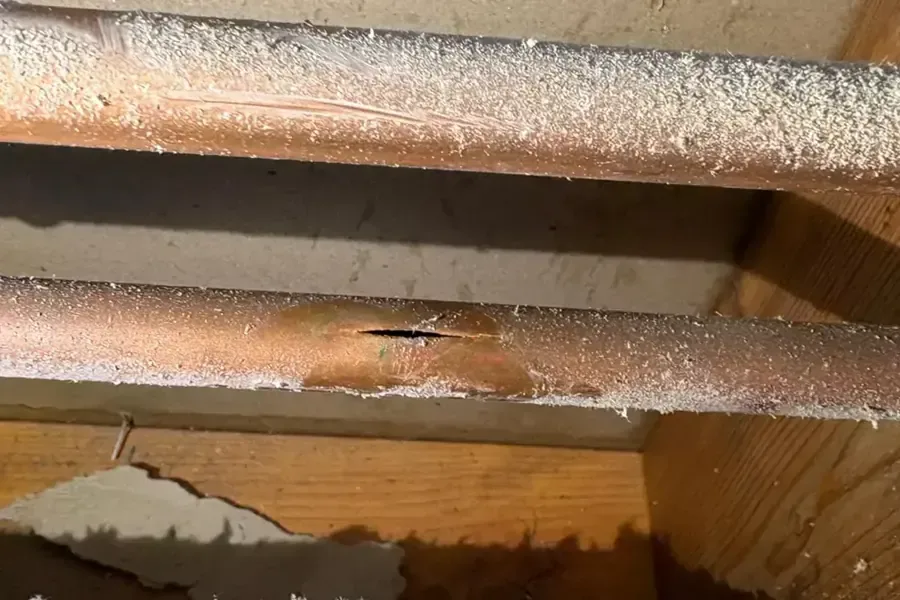
The Coopertown frozen pipe cleanup page addresses water damage associated with this type of loss. Once water escapes, cleanup follows the damaged pipe into the surrounding wall, floor or ceiling. Moisture readings define the wet boundary and show which concealed layers need access.
- Name the fixture with the observed flow change.
- Distinguish no flow from weaker than usual flow.
- Record any visible leakage as a separate observation.
- Describe changes without claiming a pipe location that has not been inspected.
Check exposed settings without inventing the house layout
Outdoor walls and uninsulated areas appear in the regional warning because they are relevant places to consider during cold weather. Whether such a setting exists around the affected plumbing must be established at the property. A room beside an exterior wall does not reveal the precise location or insulation condition of the concealed pipe.
Where plumbing runs through a crawl space, cold wind can reach exposed sections beneath the floor. The regional warning specifically identified this setting. A professional should assess access before entering, checking for standing water, electrical exposure and loose materials. Findings beneath the room can then be compared with stains or damp flooring above.
A preparation record can identify known shutoff locations and the professional contact responsible for plumbing concerns. It should not turn an uncertain pipe path into a do it yourself thawing procedure. Qualified assessment is appropriate when the suspected section is concealed, inaccessible, or associated with a visible release.
Distinguish a suspected freeze from an active release
A faucet symptom and a wet building surface answer different questions. The former concerns supply behavior, while the latter establishes a condition requiring material assessment. A technician investigating damage should document both without treating the presence of cold weather as sufficient proof that the observed water came from a frozen section.
The regional reporting also advises checking the water meter after faucets are closed when a freeze leak is suspected. That observation can contribute to the plumbing investigation, but it does not locate a concealed defect or identify all sources of water use. The result belongs with the other observations rather than standing alone as a final diagnosis.
If a release is confirmed, source control and building cleanup should have distinct responsibilities. The person addressing the plumbing needs to explain what was isolated or repaired. The cleanup assessment then identifies which rooms and finishes require attention, instead of assuming that solving the supply problem has also resolved the material damage.
- Record visible water independently of the weather account.
- Keep meter observations available for the plumbing professional.
- Identify who is handling source control.
- Mark rooms that remain unexamined after the leak is found.
Follow the wet path beyond the repaired section
The most obvious repair opening may not be the full cleanup boundary. Water can reach adjoining finishes, collect behind a cabinet, or appear below the source location. The moisture survey should follow the connections actually present in the building and explain why each additional area was included for inspection.
A wall opened for plumbing access offers an opportunity to document the exposed material before the repair is concealed. Images should show the relationship between the pipe work and surrounding finishes without suggesting that every stain came from the same incident. Existing marks or uncertain conditions should remain separately described.
The town service overview includes other possible water sources, which may matter if the observed route does not match the first explanation. The assessor should leave room for that investigation rather than force all dampness into the freeze account simply because the initial discovery occurred during cold weather.
Give cabinets and stored items separate attention
An enclosed storage area can hide a wet floor edge while its visible front still looks unchanged. Inspection notes should include accessible cabinet bases, nearby belongings and transitions into the room. Photographs of the pipe repair belong beside moisture readings from the surrounding materials, giving the owner a record of both the source correction and the remaining drying work.
Objects moved to make room for repair should retain a description of where they were found. This is particularly useful when the owner discovered water beneath stored items only after those items were lifted. The record should include when each item was moved and the condition underneath it. Those details connect later discoveries with the original water path.
Material decisions should distinguish damaged objects from those moved only for access. A dry stored item does not become a disposal item because it was near a repair, and a wet absorbent object should not disappear into an unspecified storage pile. Clear location notes support separate cleaning, retention, and specialist decisions.
- Inspect accessible cabinet edges near the release.
- Label belongings moved solely to allow plumbing work.
- Photograph newly uncovered wet surfaces when discovered.
- Keep unresolved contents questions visible in the job notes.
Watch the repaired area and the retained materials
After the source has been addressed, the cleanup record should still distinguish renewed entry from moisture already present in finishes. A new puddle or expanding boundary deserves another source assessment. Assuming every later observation belongs to the original event can conceal a condition that the first repair did not resolve.
Retained surfaces need consistent test positions during drying. The wall beside the repair, adjoining flooring, and any affected lower assembly may respond differently. A location based record lets the provider evaluate each one instead of reporting that the whole room is ready because an easy to reach surface has improved.
Changes in access or equipment should be explained in relation to those results. If an enclosed area cannot be evaluated, its limitation belongs in the handoff. Repair completion should not be used to close a drying question that still lacks observations from the materials intended to remain.
Keep a useful record for the next cold spell
The final account can help the owner identify what happened without claiming that the entire house shares the same vulnerability. It should name the affected plumbing location as established by inspection, describe the repair, and list the building materials addressed. Any recommendation about an uninspected area should remain a question for further assessment.
Coopertown is a town in southern Robertson County. Nothing in that location alone identifies a particular water provider, pipe material, or housing era. The project paperwork should use the actual property findings rather than filling those gaps with assumptions based on a route landmark or community description.
A frozen pipe cleanup visit should leave the owner with the source findings, a map of wet materials and the final readings. Keeping the earliest warning signs with that file is useful if low flow or staining returns. The next professional can compare the new symptom with the repaired section and the areas previously dried.
Questions
Does weak faucet flow prove a frozen pipe in Coopertown?
It is a possible sign identified in the regional report, not a complete diagnosis. The affected fixtures and actual plumbing condition still need assessment.
Does the cold weather report establish that a home has a crawl space?
No. It identifies one vulnerable setting. The construction beneath a specific house must be confirmed at that house.
What is the purpose of a meter observation?
Meter movement with fixtures closed gives the plumber a reason to check for continuing flow. The next step is to locate the leak and inspect the surrounding materials for escaped water.
Why is drying paperwork needed after the pipe is fixed?
The repair addresses the source, but surrounding finishes may still contain moisture. Their condition needs its own documented assessment before they are covered or treated as complete.