Measured structural drying
Structural Drying in Pleasant View, TN
Drying is a monitored process, not an equipment countdown. Marked material points, air conditions and an unaffected comparison show where the plan should change as individual building assemblies release retained moisture.
(888) 849-5796Request a drying assessment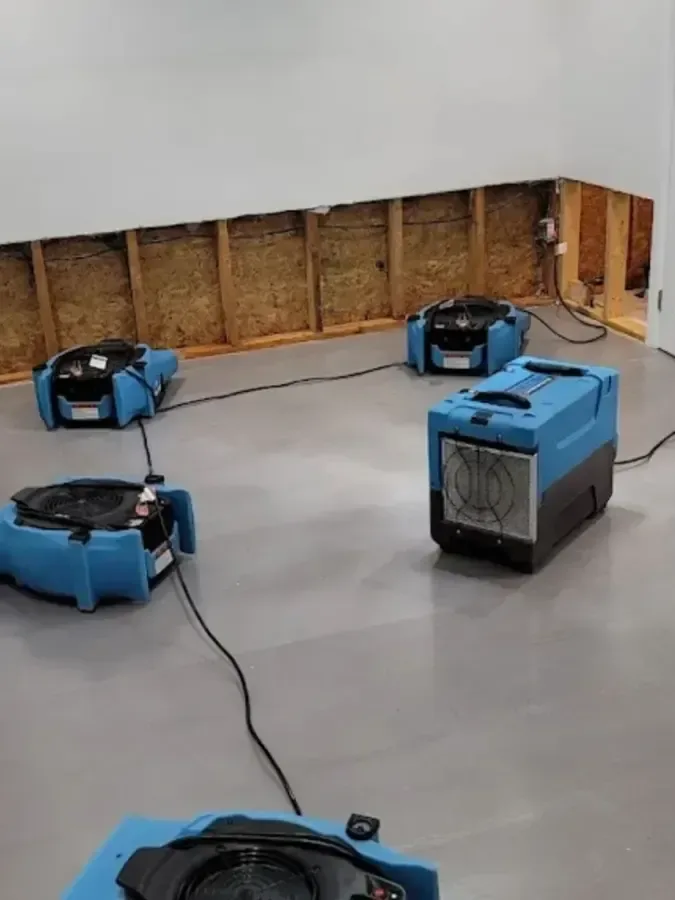
Starting document
Room and material moisture map
Core controls
Airflow and dehumidification
Coverage area
Pleasant View and Cheatham County
Completion test
Stable material comparisons
Do this first
First moves when you find structural drying
- Preserve the moisture map Keep labels and testing areas visible so later readings return to the same material points.
- Protect equipment power Avoid unplugging air movers or dehumidifiers unless safety or the project contact requires it.
- Maintain safe air paths Keep doors and containment positioned as directed for the planned drying zones.
- Report changing conditions Mention new water, unusual equipment behavior or shifted contents that could alter airflow.
Typical cost ranges
What does structural drying and dehumidification cost in Pleasant View, TN?
Drying cost follows the number of zones, material density, access, equipment capacity and monitoring needed to reach verified targets. Extraction, source work and later reconstruction may be separate.
One zone, Class 1 to 2
$1,500 to $3,000
- Air movers and dehumidifier
- Material readings
- Focused equipment changes
Several rooms or a basement
$3,000 to $6,500
- Multiple drying zones
- Cavity airflow
- Air records
Class 4, dense assemblies
$6,500 to $10,000+
- Specialized dehumidification
- Dense-material systems
- Extended monitoring
Every loss is priced on its own facts. Run the water damage cost calculator for a planning range before the walkthrough.
The work, step by step
How structural drying is handled in Pleasant View, TN
- 1
Map every material
Record the wet boundary and choose appropriate unaffected comparison points.
- 2
Arrange controlled evaporation
Expose damp faces and direct air through the defined structural zones.
- 3
Remove indoor vapor
Operate dehumidification suited to the active moisture load and conditions.
- 4
Close from stable values
Recheck labeled points and document why each device can be removed.
Structural drying begins after the source is controlled and reachable liquid is removed. The starting moisture map identifies which components can remain and which need access. Drywall, framing, flooring and dense materials release water at different rates, so one roomwide observation cannot represent every assembly.
Equipment serves a measured purpose
Air movers encourage evaporation from exposed damp surfaces. Dehumidifiers collect vapor from the air and help preserve a useful drying environment. Placement follows the wet boundary, access and material faces rather than a fixed count. Equipment is adjusted as readings show that some zones improve faster than others.
- Keep marked testing points accessible
- Do not unplug equipment without coordination
- Report unusual noise or water collection
- Leave safe airflow paths open
Repeatability makes readings useful
A number matters most when the material, location and instrument approach remain consistent. Technicians revisit labeled points and compare them with an appropriate unaffected material. Indoor air measurements add context, but they do not replace direct testing. This record shows whether retained moisture is falling and where airflow should be redirected.
Track progress in each affected material
Service covers Pleasant View Village, I-24 and Oaklawn Road. During drying, material type, saturation and access explain why one area responds faster than another. Repeat readings show whether equipment can be reduced or a wet layer needs further attention. The crew records those changes and checks the slowest locations before handing the rooms over for finish repairs.
Drying fact: Evaporation moves water from material into air, and dehumidification removes that vapor from the work zone. Both processes must be balanced around the exposed wet surface.
The endpoint belongs in the file
Final decisions connect equipment changes with material values. If a point stops improving, the team rechecks the source, barriers and airflow instead of merely adding days. Closing notes list retained assemblies, final comparisons and repair areas, creating a clear handoff after drying equipment leaves.
Structural Drying and Dehumidification and local building conditions
Local building layouts and drainage patterns guide the moisture map and equipment plan.
Service area
Structural Drying & Dehumidification across Pleasant View and Cheatham County
Structural drying is available near the village district, I-24 and Oaklawn Road. Begin with water extraction or explore the local service hub.
Service areas include Pleasant View Village, I-24, Oaklawn Road, Goodsprings Road, Town of Pleasant View.
All water damage services in Pleasant ViewRelated
Related water damage services in Pleasant View
Questions
Structural Drying and Dehumidification questions in Pleasant View, TN
1Why is extraction completed first?
Removing liquid mechanically reduces the volume that equipment must move through evaporation.
2What does a dehumidifier do?
It collects water vapor released from damp materials and helps manage the indoor drying environment.
3Are more air movers always better?
No. Placement, safe power, material exposure and vapor control must work together.
4Why mark testing locations?
Consistent points make moisture changes comparable across monitoring visits.
5Can a surface feel dry while holding moisture?
Yes. Layers beneath a finish or inside a cavity may remain damp after the face changes.
6How is the endpoint selected?
Affected readings are compared with suitable unaffected materials and project-specific criteria.
7Does local terrain determine drying time?
No. Material, saturation, access and indoor conditions determine progress at the building. If one area stalls, the source, vapor barrier, airflow and material access are carefully checked again in detail before the equipment plan changes onsite.
24/7 emergency dispatch
Structural Drying and Dehumidification in Pleasant View? Start the dry-out now.
Water that sits keeps spreading into subfloor, drywall and framing. The restoration crew handles structural drying 24/7 across Pleasant View.