Key takeaways
- A business plan should identify decision makers before a water incident creates competing instructions.
- Public access, staff movement, equipment access, and contents movement may need different routes.
- Inventory records should preserve location and contact condition before stock is relocated.
- A drying zone is a work area, not automatic permission to reopen the surrounding premises.
- Completion records should distinguish mitigation, source repairs, specialist equipment checks, and business decisions.
Start with the people authorized to make decisions
An occupied business may have a tenant manager, building owner, maintenance contact, and separate people responsible for stock or equipment. A water loss can expose uncertainty about which person can authorize access or removal. The preparation plan should identify those responsibilities in a form that can be used when the usual manager is unavailable.
Authorization for cleanup should not silently become authorization to dispose of inventory or interrupt a process. The plan can distinguish routine access from decisions requiring an owner or specialist. Clear roles also help the provider avoid receiving incompatible instructions from people who each understand only part of the operation.
The Portland commercial water damage page describes a service category, while a site contact list makes that service workable at the actual premises. The list should be maintained as business information, without presenting it as evidence that a named local employer has experienced a water loss.
- Identify the person who can authorize building access.
- Name a separate contact for stock disposal when needed.
- Record the maintenance contact for source questions.
- Provide a way to resolve conflicting instructions.
Draw the premises around its real daily use
A useful room plan identifies storage, work areas, public areas, and access to building systems as they actually exist. A manufacturing setting and a small storefront may organize those functions differently. The documented presence of both commercial contexts in the area does not justify assuming a particular layout for an individual business.
The plan should also identify fixed equipment or stock that may conceal floor and wall edges. That information helps an assessor understand where inspection could require coordinated movement or specialist assistance. It should not be treated as permission for cleanup personnel to disconnect business equipment outside their assigned responsibilities.
Main Street developed around the depot, and the railroad continues through the center of Portland. A business contact can help the crew identify the correct entrance and arrange access around deliveries. Inside, a simple floor plan should mark wet rooms, shared passages and utility shutoffs so extraction hoses and stored stock stay out of working routes.
Set movement boundaries before work begins
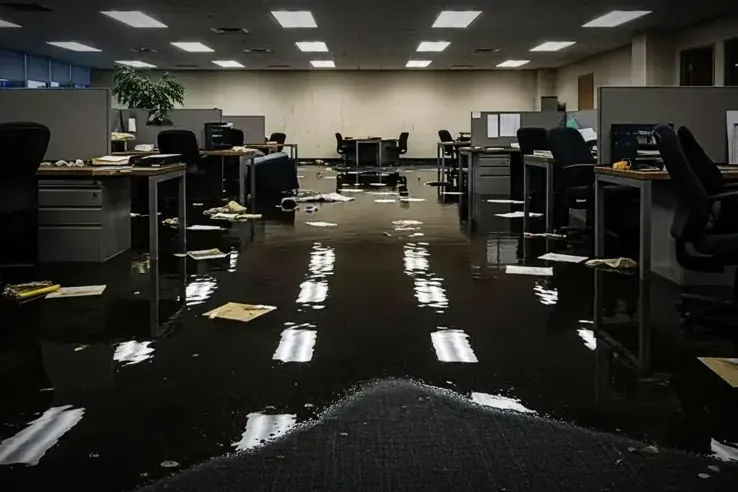
Water recovery can bring hoses, equipment, removed finishes, and relocated stock into spaces normally used by staff or customers. The response plan should identify how those movements will be managed before routine activity resumes through the work area. A clean looking path is not sufficient if it intersects unresolved hazards or active cleanup.
The property contact and provider should agree on which areas need restricted access and how changes will be communicated. Those boundaries may need revision as hidden damage is found. A written update helps prevent staff from relying on a room arrangement that was appropriate earlier but no longer reflects the work underway.
Access to an unaffected business function may be possible in some circumstances, but it should not be promised from a generic plan. Building conditions, equipment exposure, and the actual routes available require assessment. Decisions about occupancy belong with the responsible parties, separate from a technician simply moving a drying device out of a doorway.
- Mark equipment and contents movement routes.
- Identify areas awaiting a safety or access decision.
- Communicate boundary changes to the business contact.
- Keep reopening decisions separate from equipment relocation.
Preserve stock information before relocating it
Inventory location can matter as much as the item description after water enters a workplace. A floor level carton and goods on a raised shelf may have different contact conditions. The initial record should preserve those positions before staff move stock into a common holding area and erase the distinction.
An inventory note should state what was observed rather than declare every nearby object damaged. Water contact, packaging condition, and any specialist decision can be recorded separately. Valuation and business accounting should remain with the appropriate owner or professional instead of becoming an unsupported estimate in the cleanup report.
The town water service hub covers a broader set of water problems. Within a commercial project, a more detailed item or stock group record is often needed so the business can connect each movement with its original location, current destination, and pending disposition after the building area becomes accessible again.
- Record original shelf or floor position.
- Distinguish wet packaging from verified product contact.
- Label stock awaiting a specialist decision.
- Retain the authorization behind disposal or relocation.
Building inspection and specialist equipment checks
A moisture assessment can describe affected walls and flooring without establishing whether production or office equipment is ready to operate. The response plan should identify equipment that needs its own qualified inspection. A dry surrounding floor should not become an implied clearance for an object whose internal condition has not been assessed.
The same separation helps when equipment blocks access to the building. A provider may need movement coordinated with the responsible maintenance or specialist contact before checking the finish beneath it. The record should identify that limitation and the eventual findings rather than report an inaccessible area as unaffected.
Source investigation also needs a clear owner. An indoor pipe release, exterior entry, and an equipment related leak require different questions. The assessor should document the observed water path while the responsible professional addresses the source, avoiding a single broad label that hides which part of the incident remains unresolved.
Monitor drying by material instead of business department
A useful drying record names the material as well as the room: carpet and backing in an office, for example, or wall bases behind storage racks. The monitoring plan should distinguish affected flooring, wall edges, and accessible underlying layers. Material specific locations make progress understandable even when stock and room functions change during the recovery period.
Equipment placement may need adjustment as access improves or one section responds differently. The notes should connect each change with the reason for it, such as reaching a previously obstructed edge. This makes the drying history reviewable without asking a later reader to infer the purpose from photographs of devices alone.
An area released from mitigation should have a defined boundary and a record of the material condition supporting that release. It should not imply that the entire business has been cleared for use. Remaining specialist checks, source work, and repairs need their own status so the business manager can coordinate the next decisions.
Prepare a handoff that the business can act on
The final project account should make completed and unfinished work easy to distinguish. It can identify cleaned areas, removed material, retained assemblies evaluated, and openings left for repair. The stock record should connect with that room account without turning it into a replacement value estimate or a promise about reimbursement.
A separate list of pending responsibilities is useful when several providers worked on the incident. Source repair, equipment inspection, finish replacement, and the decision to resume operations may belong to different people. Naming the outstanding task prevents a general statement that cleanup is complete from being mistaken for completion of everything the business needs.
The business contact should receive the commercial recovery record before equipment leaves. It should identify who approved removal, which rooms are ready for the next trade and what remains restricted. Photos taken from the same positions before and after cleanup make the handoff easier for staff returning to the premises.
Questions
Do the named Portland manufacturers have documented water damage in this article?
No. Their presence establishes local commercial context only. The article makes no claim about damage, working conditions, or cleanup at any named company.
Who decides whether affected stock can be discarded?
The business should identify the authorized decision maker and any required specialist input. Cleanup access permission should not be assumed to include every inventory decision.
Can an unaffected department remain open automatically?
Its apparent lack of water is not enough to settle occupancy. Access routes, surrounding work, and relevant equipment or building concerns still need assessment by the responsible parties.
What should a partial mitigation handoff say?
It should identify the exact area and materials completed, the basis for that status, and the tasks still outstanding elsewhere. It should avoid implying a broader operational clearance.