Key takeaways
- A past rainfall total cannot assign damage or a flood zone to an individual property.
- The route from outdoors into the building belongs in the initial inspection record.
- Sediment and material contact affect more than the task of removing visible water.
- Contents handling should preserve the distinction between touched and untouched belongings.
- Drying completion needs evidence from the layers intended to remain in place.
Use the rainfall account within its limits
The reported storm offers a reason to plan for rapidly changing water conditions, not a prediction about the next event. A past total says nothing by itself about the height water reached at a particular door. It also cannot determine which room became wet, how long materials remained in contact, or whether a different source was involved.
Portland lies on the Highland Rim, but that geographic description does not assign a flood designation to a building. The property assessment should preserve the distinction between regional setting and direct observations. Any question about a mapped property condition needs the appropriate property information rather than a conclusion drawn from the community name.
The local flash flood cleanup page describes the relevant service. Before that scope is applied to a loss, the assessor should identify the actual entry route and affected surfaces so the project record explains the building encountered rather than retelling the earlier storm.
- Keep historical weather accounts separate from current observations.
- Record the opening where entry was actually seen.
- Describe uncertain causes without turning them into conclusions.
- Avoid assigning a water depth from a regional rainfall total.
Document the outside route before debris is cleared
An exterior survey can identify where water collected and which openings show signs of contact. Photographs should connect close details with the wider setting so sediment at a threshold can be located later. Such observations should be gathered only after access has been evaluated, without entering water to improve the photograph.
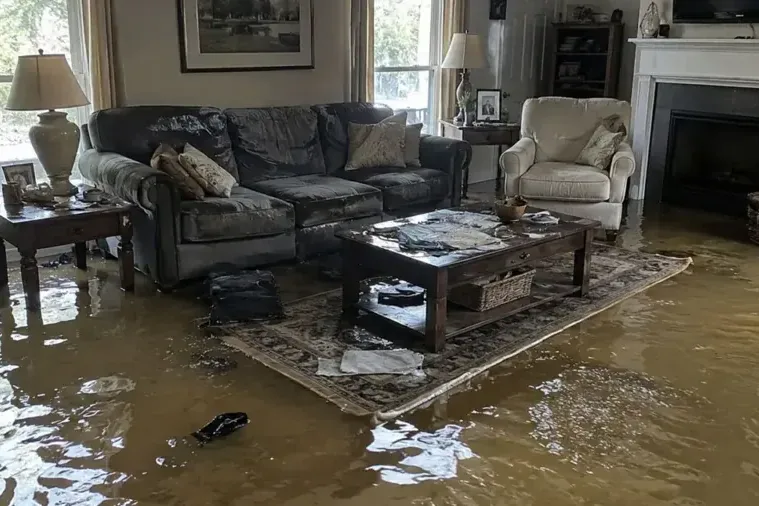
The route matters because outside water can pick up soil and debris before reaching a room. Marks around the opening, sediment on flooring and water beneath stored items belong in the condition record. Together, these observations help the assessor choose containment, cleaning and disposal methods suited to the materials that were contacted.
Cleanup can quickly remove the details that explained the initial boundary. The first photographs should therefore be retained even when later pictures look clearer or more orderly. The contrast between the original contact and the cleaned surface helps show what was addressed and why additional material assessment remained necessary.
Plan a work area around the affected entrance
An entrance may serve occupants, contents movement, and equipment access at the same time. The work plan should consider those uses before hoses, containers, or removed material occupy the route. A clearly identified affected area makes it easier to keep routine household movement from crossing the cleanup work.
Objects near the doorway should be recorded before relocation when conditions allow. An item moved from a wet floor should not lose its contact history simply because it is now in a dry room. Labels and photographs can maintain that distinction while making space available for extraction and inspection.
If a separate protected movement route is needed, its purpose should be clear to everyone using the building. Cleanup personnel and occupants may otherwise make conflicting decisions about where objects belong. A brief written arrangement can preserve access and avoid repeatedly shifting belongings over surfaces that have already been assessed.
- Identify the entry used for cleanup equipment.
- Keep affected contents identifiable after movement.
- Reserve access to wall bases and floor transitions.
- Explain any temporary room restriction to the property contact.
Treat extraction and material decisions as different tasks
Accessible liquid should be addressed with equipment suited to the surfaces and conditions encountered. Once the puddle is gone, the assessor still needs to decide which finishes are cleanable and which layers can be evaluated. A successful water removal operation does not automatically make every absorbent object suitable to retain.
Floor coverings can hide backing, seams, and transitions that received water differently from the visible surface. The inspection should describe what is known about those layers and where an opening is required. A removal decision is easier to understand when it identifies the specific condition or access problem it is intended to resolve.
The Portland water damage overview covers other sources as well as floodwater. A service label should help organize the work, while the observed water route and material condition determine the individual treatment. The cleanup file should not substitute a general page description for room specific decisions.
Track belongings by contact and destination
A contents inventory can begin with straightforward descriptions of where objects were found. Items on the floor, inside a closed cabinet, and above the apparent water edge may need different assessment. Their position is a useful observation, but the provider still needs to consider actual contact rather than declare condition from storage height alone.
Durable and absorbent objects should be evaluated according to their material and exposure. Papers or specialty equipment may need a separate provider, while disposal decisions should identify the person who authorized them. The inventory should avoid invented values and broad promises that everything in a category can be restored.
An updated destination list prevents the recovery record from ending when objects leave the room. It should be possible to connect an item in temporary storage with its original location and pending decision. This also helps the owner determine whether an object is ready to return when the building work is complete.
- Record original location and observed water contact.
- List temporary storage destinations as they change.
- Separate condition notes from replacement valuation.
- Retain authorization associated with discarded contents.
Inspect retained layers throughout the drying period
A drying plan should name the wall and floor assemblies intended to remain. Measurements need identifiable locations within those assemblies, including edges that were previously concealed. Without that detail, a report may show improving room conditions while leaving unanswered whether the material beneath a retained finish was ever evaluated.
Equipment arrangements should respond to access, exposed surfaces, and measured progress. A slower section may need closer examination before more devices are added. Recording the reason for an adjustment lets the next visit evaluate whether that change helped instead of treating every visit as a fresh setup with no connection to earlier findings.
The final comparison should account for the same materials that defined the affected area. A surface that feels dry is an observation, but it cannot stand in for the entire assembly. Remaining uncertainty should be stated in the record before decorative finishes cover the locations still requiring assessment.
Make the closing file useful beyond the cleanup visit
A clear project account distinguishes the original storm information, observed building entry, and completed mitigation work. Those subjects are related, but each answers a different question. Keeping them distinct helps an owner explain the loss without suggesting that a historical rainfall total proves the cause or extent of current damage.
Repair needs should be identified by room and material, with source correction noted separately when another trade handles it. An unresolved exterior opening deserves a plain description. Neither a cleaned threshold nor a dry room establishes that a future outside water event cannot reach the same opening again.
The flash flood service details offer the broader service context. The closing file should provide the particulars that page cannot: contents decisions, removal locations, retained material readings, and any inspection limitation that the repair contractor or property owner still needs to resolve.
Questions
Does the May 2017 report place every Portland property in a flood zone?
No. It describes a past regional event. A property designation requires information about that property, and current damage still needs a building inspection.
Why photograph sediment before removal?
Its position may help explain the path and extent of outside entry. Once cleared away, that original relationship can be difficult to reconstruct without images.
Can untouched belongings share an inventory with affected items?
They can share a record if their condition and location are clearly distinguished. They should not receive an affected label merely because other possessions in the room contacted water.
What is missing from a report that only lists drying equipment?
It may not identify the materials monitored, their response, or the condition supporting completion. Those findings explain the building result more directly than device names alone.