Mansker Creek and Dry Creek · Goodlettsville, TN
Flash Flood Cleanup in Goodlettsville, TN
Water that comes up out of Mansker Creek or the Dry Creek carries soil, runoff and sewage. The mitigation team treats it as Category 3 from the first hour: contain, remove, clean and dry.
(888) 849-5796Get the floodwater cleanup started in Goodlettsville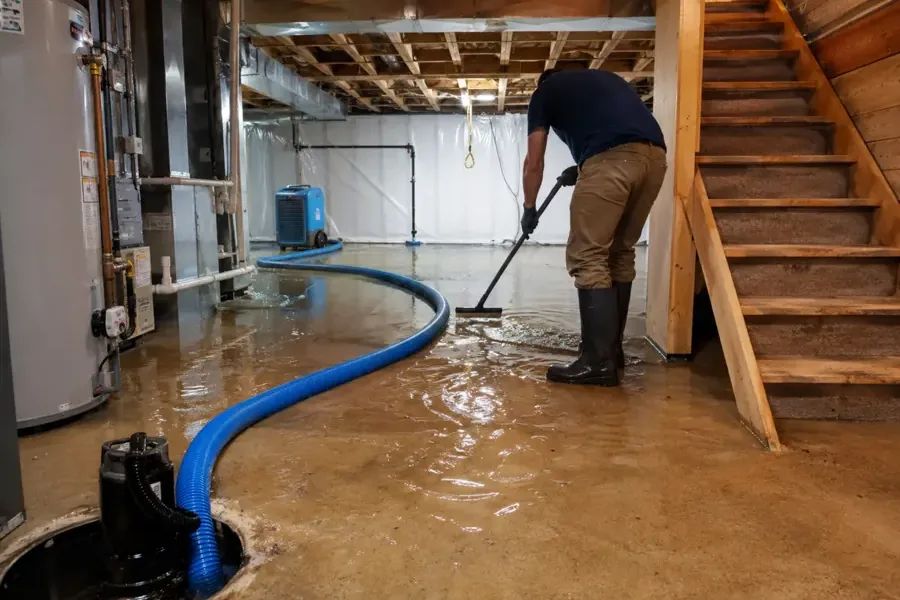
Water category
3 from the start
Main risk
Silt, runoff and sewage in the water
Drying standard
IICRC S500
Porous materials
Removed, not dried
Do this first
First moves when you find river and creek flooding
- Stay out until it is safe Wait until power and gas are off or confirmed safe.
- Wear boots and gloves Treat every surface the water touched as contaminated.
- Photograph the water line Document the high-water mark on every wall.
- Do not run the furnace Have it checked before it runs if water reached it.
- Call early Silt and wet drywall get harder to handle every day.
Typical cost ranges
What does river and creek flood cleanup cost in Goodlettsville, TN?
In Goodlettsville, TN, river and creek flood cleanup typically runs $5,000 to $40,000 or more. The drivers are how high the water rose, how many rooms it reached, how much silt came in and how much material has to be removed.
Low water, one level
$5,000 to $12,000
- Pump-out and silt removal
- Low flood cuts
- Antimicrobial and drying
Full lower level
$12,000 to $25,000
- Drywall and insulation out
- Containment and HEPA
- Structural drying
Deep or multi-level
$25,000 to $40,000+
- Wide demolition
- Desiccant drying
- Extended monitoring
Every loss is priced on its own facts. Run the water damage cost calculator for a planning range before the walkthrough.
The work, step by step
How river and creek flooding is handled in Goodlettsville, TN
- 1
Make it safe
The mitigation team confirms utilities and sets containment and HEPA air scrubbers.
- 2
Remove water and silt
The extraction crew pumps, extracts and shovels out mud and debris.
- 3
Remove and treat
Porous materials come out and surfaces get an EPA-registered antimicrobial.
- 4
Dry and document
The drying team runs equipment and logs readings to the drying goal.
Mansker Creek runs through Goodlettsville, and state wastewater records identify the Dry Creek Parkway creek system. Local news reported rapidly rising floodwater during a May 2024 event. When they reach a house, the water that comes in is surface floodwater, which the IICRC S500 standard treats as Category 3.
What makes flash flooding different
- The water carries silt, lawn chemicals, fuel and often sewage from overloaded systems
- Mud settles into carpet, wall cavities and ductwork as the water drops
- Porous materials it touches, such as drywall, insulation, carpet and pad, are removed rather than dried
- Flood insurance, not a standard homeowners policy, usually covers it
How the cleanup works
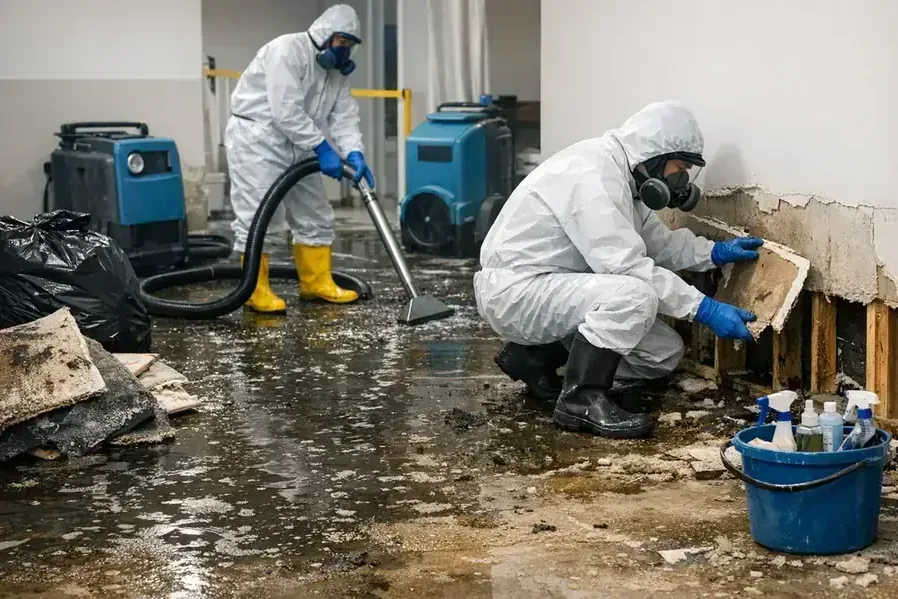
Nobody goes back in until power and gas are confirmed safe. The mitigation team then sets containment and HEPA air scrubbers, pumps out remaining water and shovels out silt. Drywall and insulation are cut out above the high-water mark, carpet and pad are removed, and hard surfaces are cleaned and treated with an EPA-registered antimicrobial at its labeled dwell time.
Only then does drying start. The drying team runs air movers and LGR dehumidifiers, with desiccants where dense framing or a wet slab needs it, and logs readings every day until the structure reaches its goal.
Trade fact: porous materials touched by Category 3 water get removed, not dried, because drying does not remove what the floodwater left behind in them.
Before and after the water drops
Photograph the high-water line on the walls and every damaged item before cleanup, because the flood claim file depends on it. The FloodSmart.gov flood insurance site explains how flood claims work, and the Ready.gov flood page lists what to do before returning home. See also storm water damage for runoff that is not floodwater.
River and Creek Flood Cleanup and local building conditions
Rapid runoff affects low areas near Mansker Creek, Dry Creek and Rivergate Parkway, so outside water is treated as Category 3.
Service area
River and Creek Flood Cleanup across Goodlettsville and Davidson County
The restoration team covers Goodlettsville ZIP codes 37070 and 37072, from Main Street and Mansker Creek to Rivergate Parkway, Gallatin Pike and Dry Creek Parkway, plus Springfield, Coopertown, Pleasant View, Portland and Joelton.
See every area and ZIP coveredRelated
Related water damage services in Goodlettsville
Questions
River and Creek Flood Cleanup questions in Goodlettsville, TN
1Is river floodwater Category 3?
Yes. Surface water from a river or creek carries soil, runoff and often sewage, so it is handled as Category 3 from the start.
2Can drywall be dried after a river flood?
No. Drywall and insulation touched by Category 3 water are removed above the high-water mark, then the framing is cleaned, treated and dried.
3Does homeowners insurance cover flash flooding?
Usually not. Rising surface water is typically covered by flood insurance, such as a National Flood Insurance Program policy. Coverage depends on your policy, so it is worth checking with your own insurer.
4When can the house be entered?
After the water has dropped and power and gas are confirmed safe. Wear boots and gloves, and keep children and pets out.
5How long does flood drying take?
After removal and cleaning, the structure often dries in four to seven days. Dense framing and slabs can take longer.
6What happens to the silt?
The extraction crew removes it with shovels, squeegees and extractors before any drying starts, because drying over silt locks the contamination in.
24/7 emergency dispatch
River and Creek Flood Cleanup in Goodlettsville? Start the dry-out now.
Water that sits keeps spreading into subfloor, drywall and framing. The restoration crew handles river and creek flooding 24/7 across Goodlettsville.